
Self-Evident.
A moral case

Perhaps my favorite word in the Declaration of Independence is “self-evident.”
“We hold these truths to be self-evident that all men are created equal.”
I went in search of stories behind the phrase. Here is a recent Brookings Institute podcast: two women scholars, Katie Dunn Tenpas and Vanessa Williamson tell us some stories. Williamson begins,
“One of the things that this document does is present the moral case for independence and to place the case of the United States…in a much bigger moral, ethical, philosophical framework that explained what justified what would become the United States to the world.
Britain was indisputably the most powerful empire the world had ever known….there is sort of a romantic story that we we sometimes forget now– we’re sort of cynical– about how brave fundamentally it was to decide to challenge that great military force. And what were these little colonies thinking they were gonna do?
Their mindset was against all odds. They had taken their lives in their hands. [This document] was in a sense a point of no return.”
For an idea.
The Declaration was one small step towards unification, it would be a decade before the Constitution was written. This unification is something that we are still working on, and probably always will. That’s part of who we are.
The phrase was written by Thomas Jefferson and Ben Franklin in a matter of days. Apparently, Jefferson, the aristocrat, first wrote, “these truths as sacred and undeniable.” The story is Franklin, the print shop worker, came up with “these truths are self-evident.” The change made the idea more grounded, without a religious undertone. Williamson puts it this way:
“That transition from sort of a highfalutin magical orientation for the basis for human rights, and a much more practical sort of basically science-based approach to the concept of democracy is of the great achievements, I think, of the document."
“[The Declaration] gave freedom fighters throughout our history, from the abolitionist to the women’s movement to today, a language to draw upon.”
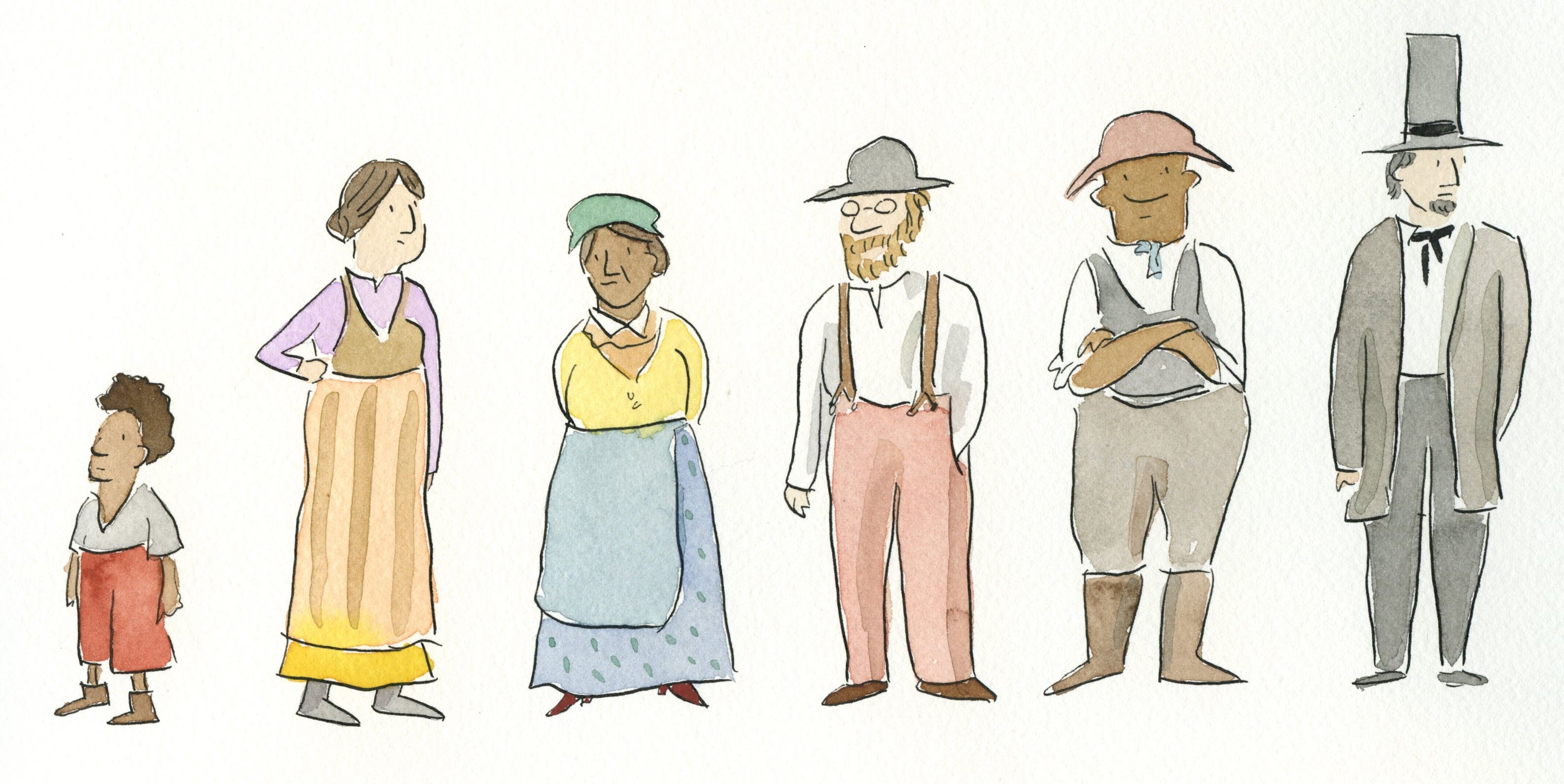
Self-evident means obvious, not needing proof. In essence, the Declartion states that no matter race, gender, religion or ethnicity, everyone is created equal as a truth. Something everyone should know, agree on; end of story.
I am well aware the founders were not perfect, and equality was far from a reality in their time. They had a good idea. We are still trying to be a better union and live up to that idea. Can we rise above our current reality of distortion or ignoring of the truth? As we think of this phrase, let’s come together. We are all equal.
In order to save our Constitution, which is currently under attack, we have to repudiate Trump and unite. This is crucial.
Thanks for being here, I hope you are enjoying the day!!
Thank you for this exploration of "self-evident." The history of the phrase is just about perfect. This part bears repeating: “That transition from sort of a highfalutin magical orientation for the basis for human rights, and a much more practical sort of basically science-based approach to the concept of democracy is of the great achievements, I think, of the document."
“[The Declaration] gave freedom fighters throughout our history, from the abolitionist to the women’s movement to today, a language to draw upon.”
As you say, the founders weren't perfect but the gift of truth they gave us is pretty remarkable. Reading Ruth Ben-Ghiat this morning, I was reminded of what we can be proud of: America, she says "has been one of the world’s only successful experiments at creating a multiracial, multifaith democracy." Happy Independence Day!
We must not forget how fragile democracy is.